
Introduction: A City Transformed
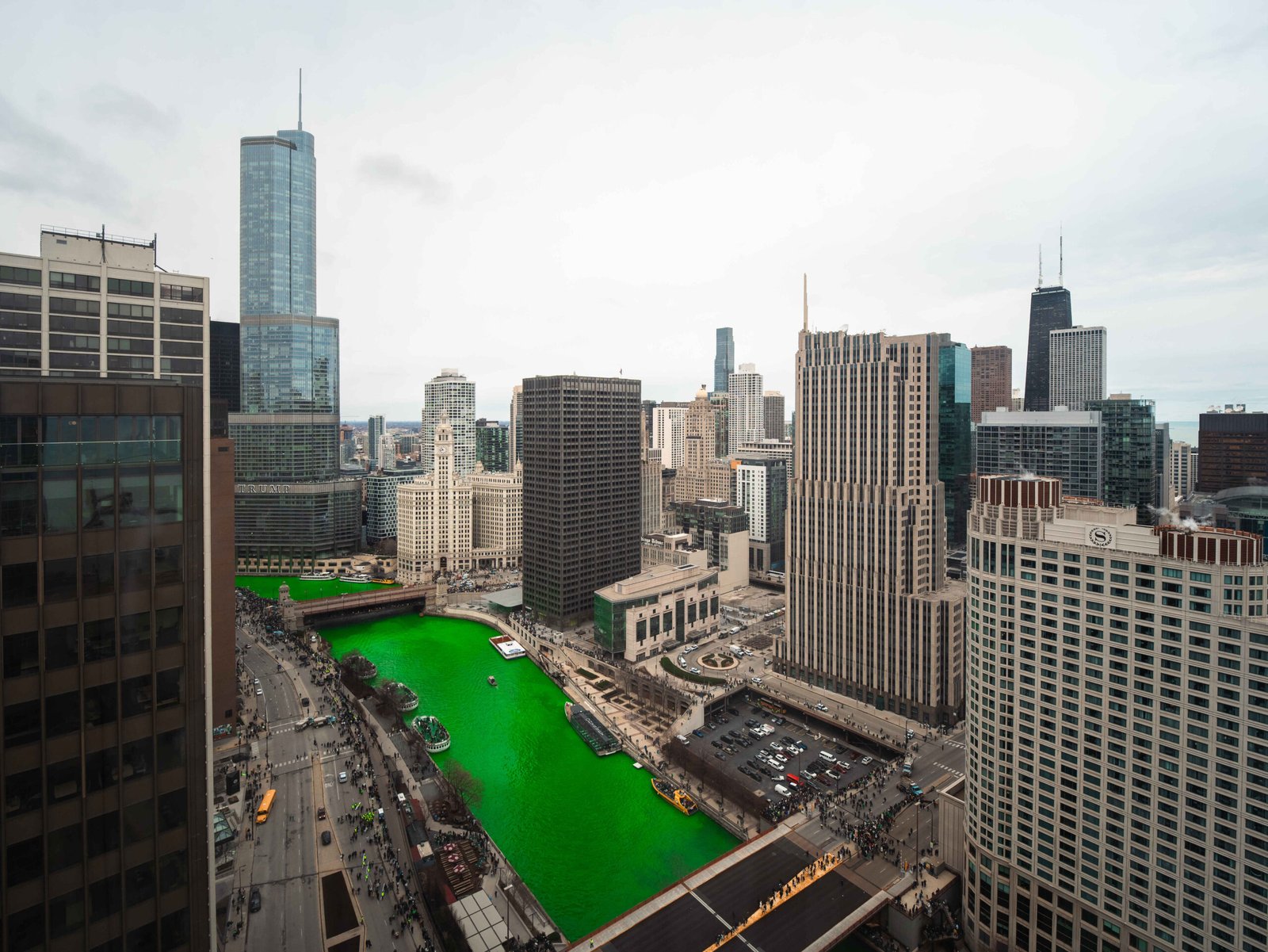
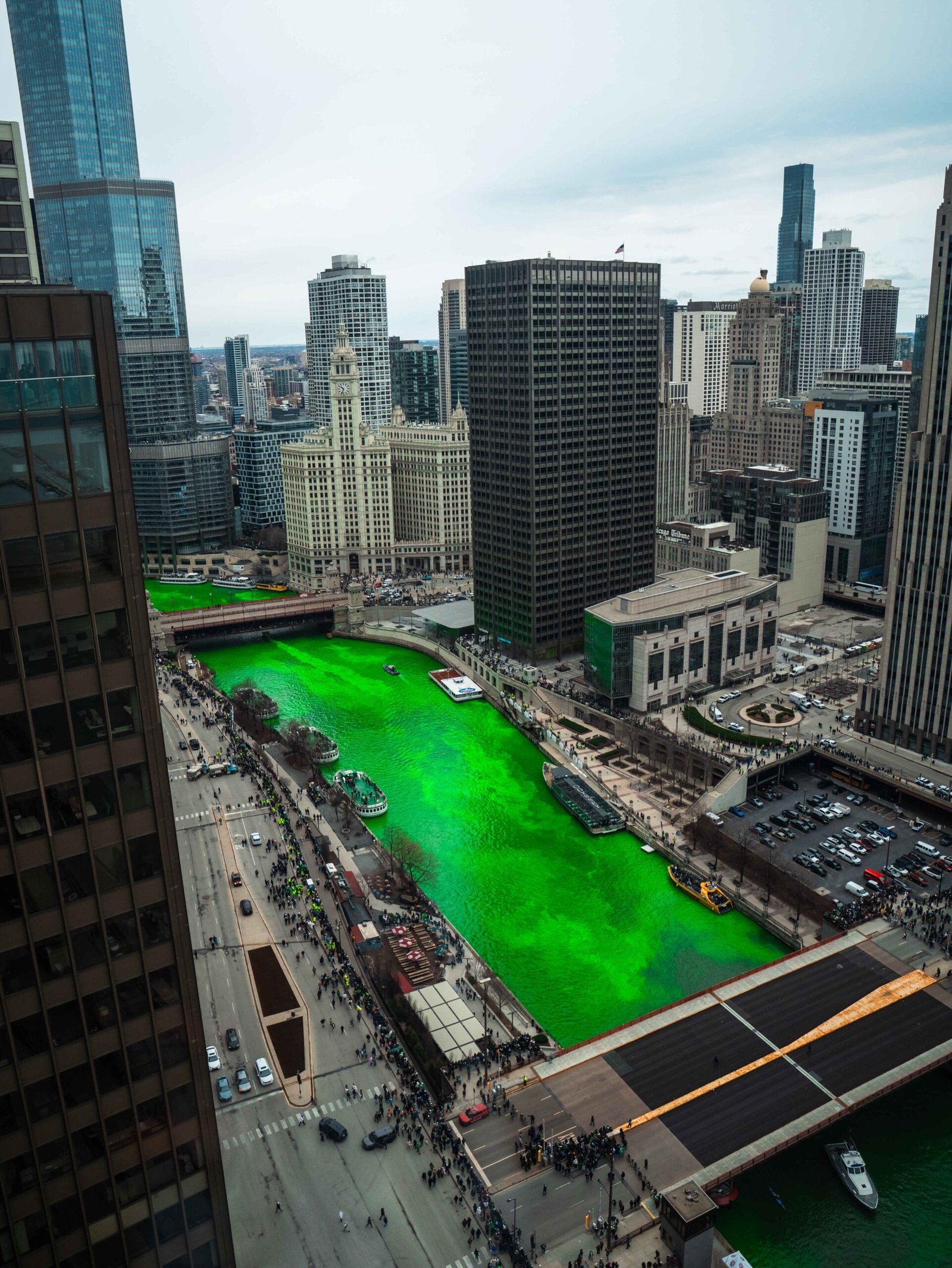
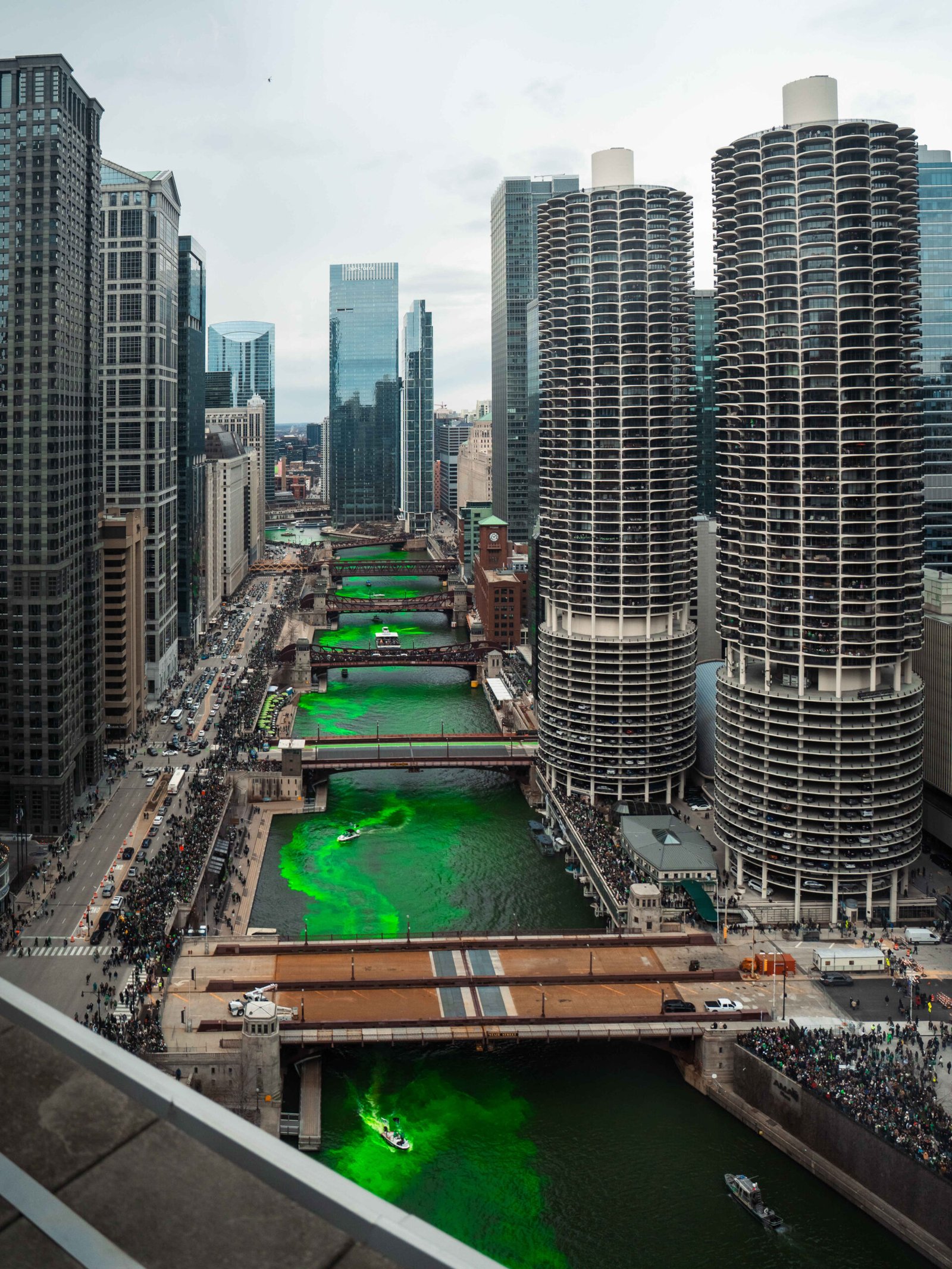
Every year, Chicago does something that defies logic, environmental norms, and the gray sobriety of a Midwestern winter. It turns its river a neon, almost radioactive shade of emerald. On Saturday, March 14, 2026, I stood 39 stories above the pavement, looking down at a city that seemed to vibrate with anticipation.
Chicago St Patrick’s Day photography is not just about capturing green water. It is about documenting energy, scale, and emotion. St. Patrick’s Day in Chicago is more than a holiday. It is a seasonal turning point. The city collectively decides that spring has arrived, regardless of what the thermometer says.
This year felt especially powerful. As a photographer, my goal was not only to capture the dyed river but to tell a broader story. I wanted to show the human spirit gathering along the Wacker Drive canyon. To do that, I needed height, perspective, and a technical setup that could handle Chicago’s unpredictable atmosphere. This is how I captured the Green River from some of the most exclusive vantage points in the city.
The History of the Green River Tradition
To understand why hundreds of thousands gather in the cold at 10:00 AM, you need context. The tradition started in 1962. Stephen Bailey, business manager of the Chicago Journeymen Plumbers Local 130, noticed that dye used to trace illegal waste turned the river bright green.
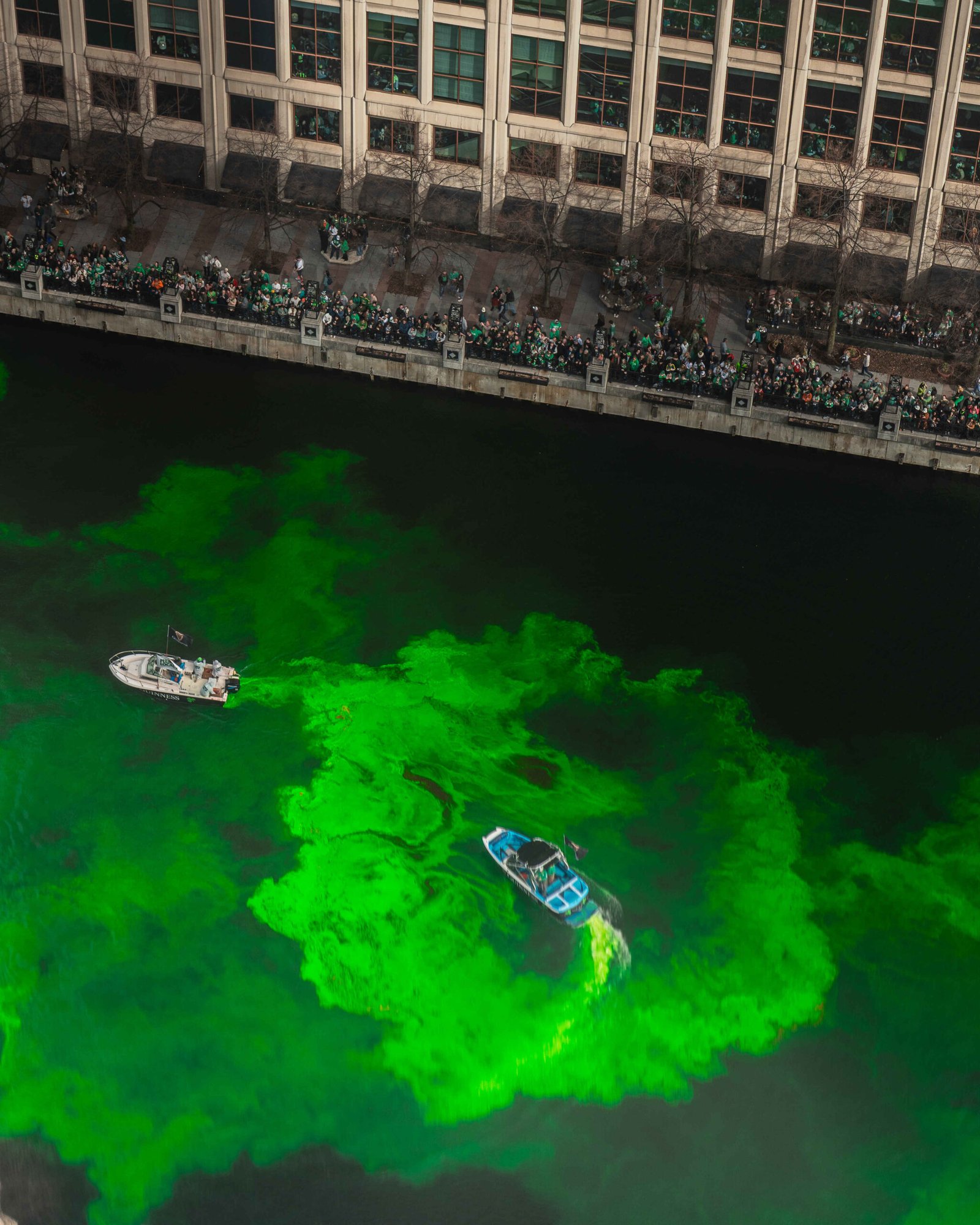
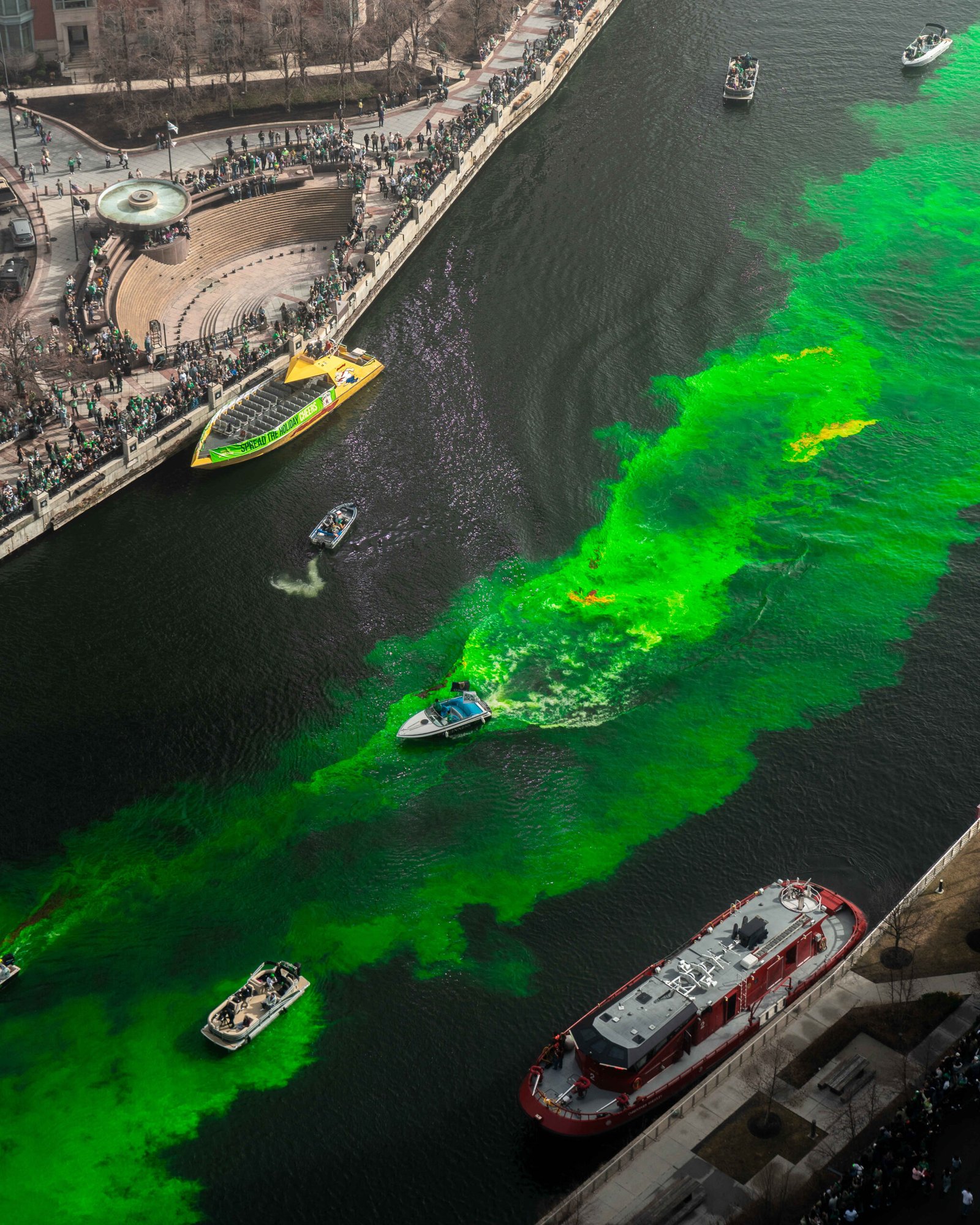
That discovery sparked an idea. If a small amount could change the color, a larger quantity could transform the entire river. Early versions used oil-based fluorescein, which kept the river green for days. Today, the union uses a safer vegetable-based powder that appears orange but turns emerald on contact with water.
You can explore more about the tradition through the official coverage by Chicago Tribune and City of Chicago resources.
In 2026, the event still connects the city’s industrial past with its cultural identity. As an architectural photographer, I see the river as Chicago’s central corridor. On this day, it becomes the focal point of the entire city.

The Gear: Precision in the Windy City
Chicago St Patrick’s Day photography demands flexibility. The light changes quickly, and your perspective can shift within minutes.
Primary Camera Setup
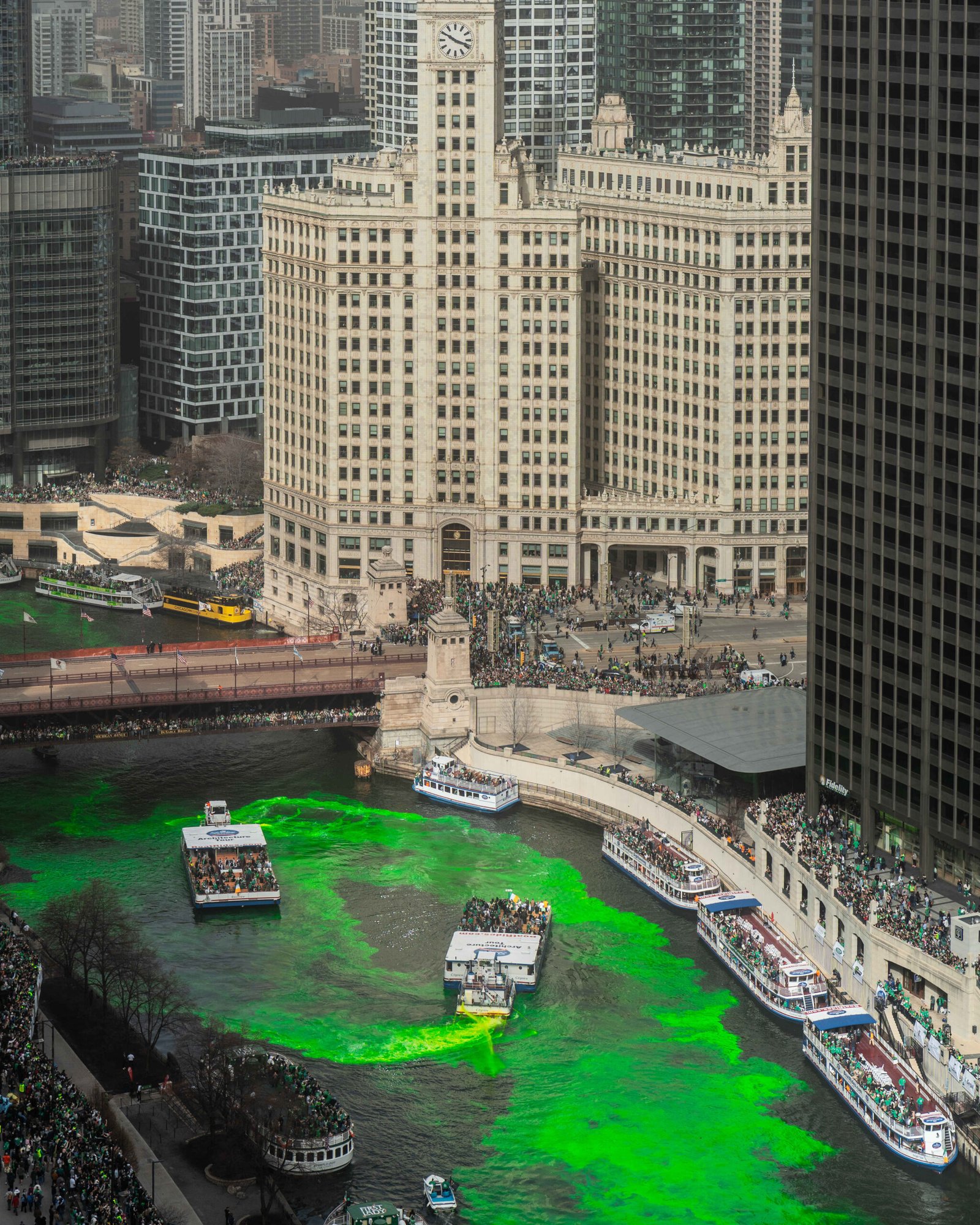
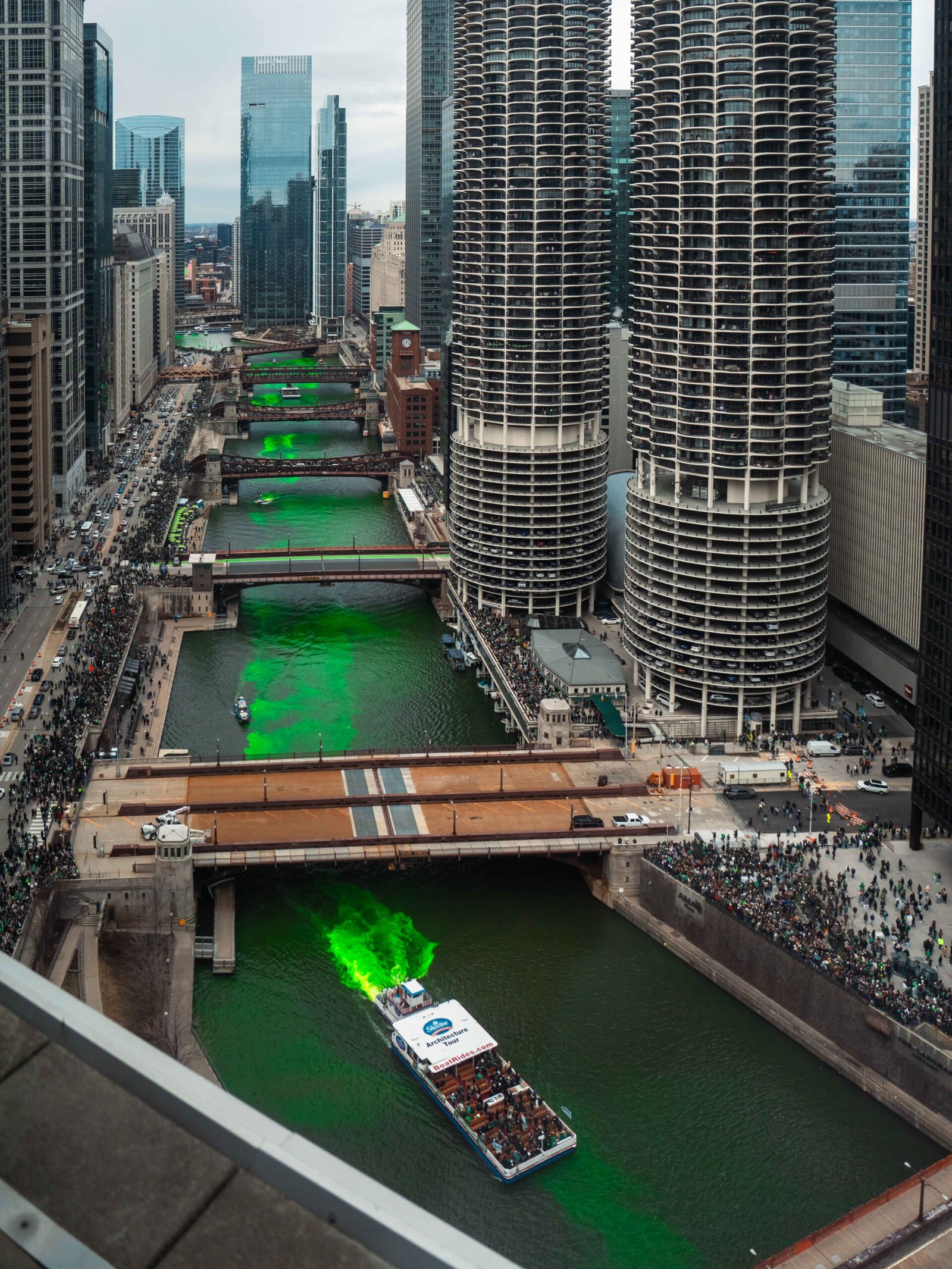
The workhorse for this shoot was the Sony A7iv paired with the 24-70mm GM Mark II. From the 39th floor, 24mm captured the sweeping S-curve of the river. At 70mm, I could isolate the dye boats operated by the Chicago Journeymen Plumbers Local 130.
Ultra-Wide Perspective
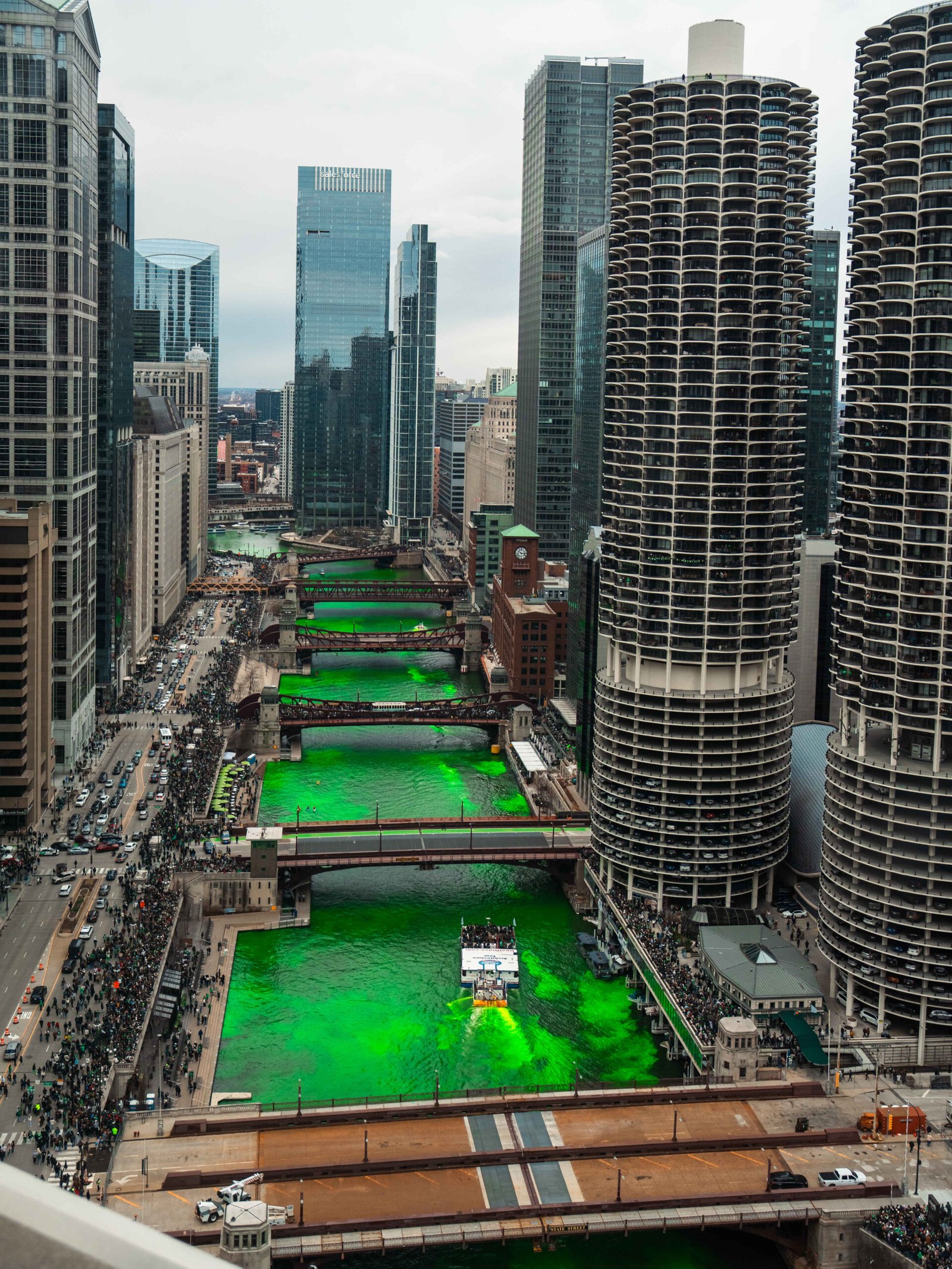
The Viltrox 14mm Air Series played a crucial role. In locations like the Presidential Suite at the Swissôtel or the Penthouse at the Royal Sonesta, even 24mm felt limiting. The 14mm lens delivered a wide, cinematic view that emphasized the scale of the skyline.
For more gear insights, you can explore my detailed breakdown on TheFacetPixel.
7:00 AM: Pre-Dawn Preparation
Preparation started early. At 7:00 AM, the sun had barely risen over Lake Michigan. I spent time checking sensors and formatting cards. On a day like this, there are no second chances.
The forecast predicted overcast skies, 34°F, and a chance of precipitation. I packed extra batteries and microfiber cloths. Cold weather drains batteries faster than expected. By 8:30 AM, I was heading toward the Loop. The trains were already filled with people wearing green jerseys and shamrock hats.
9:00 AM: Arrival at the Royal Sonesta
By 9:00 AM, the city was already alive. Crowds lined the Michigan Avenue Bridge, also known as the DuSable Bridge. I made my way into the Royal Sonesta Hotel at 71 E Wacker Drive.
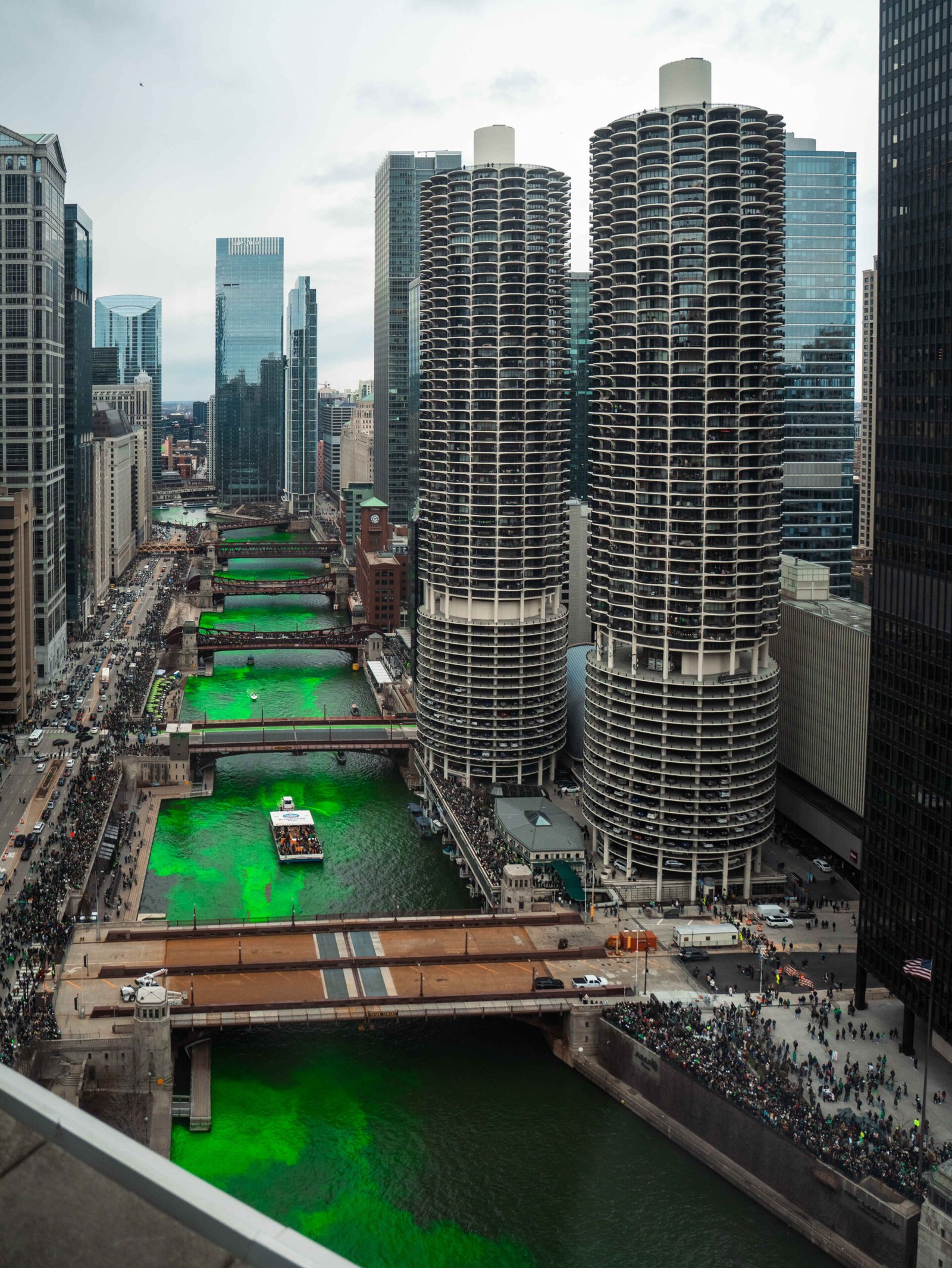
The highlight here is the 39th-floor Penthouse. Through collaboration, I gained access to this vantage point. Stepping onto the terrace, the wind made its presence known. At this height, Chicago truly lives up to its nickname.
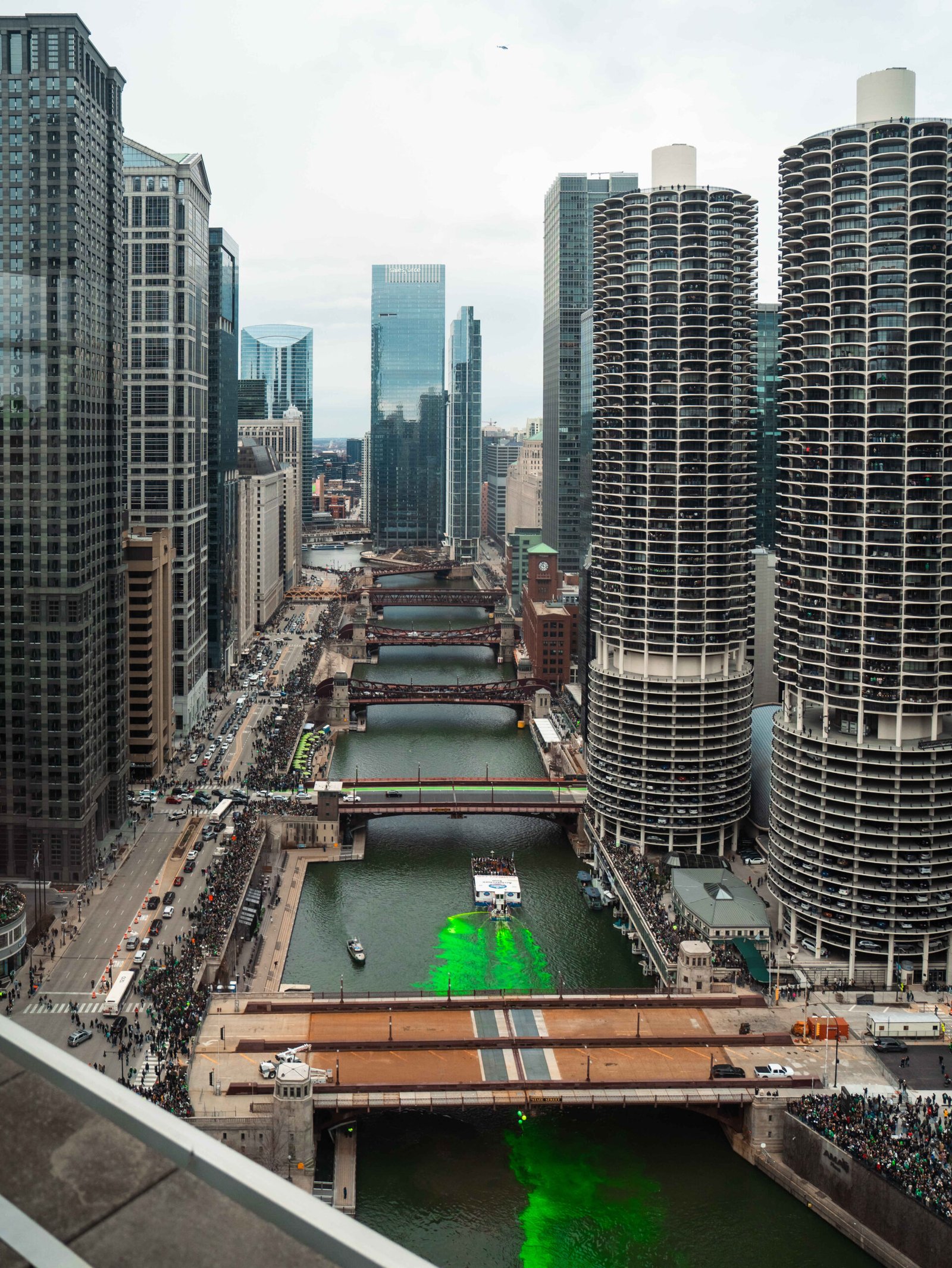
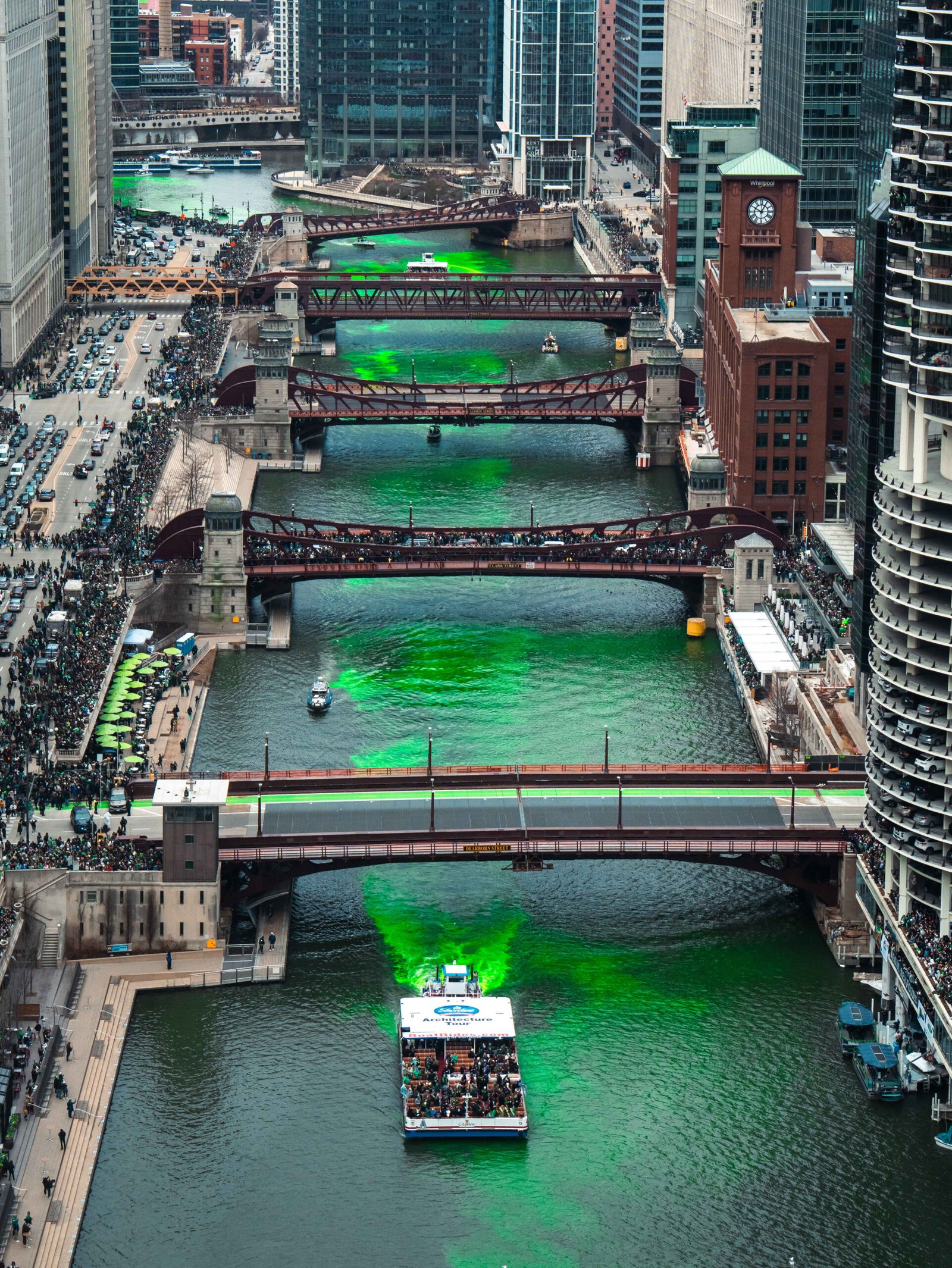
From this position, the view down the river toward the Merchandise Mart is unobstructed. It offers one of the best perspectives for Chicago St Patrick’s Day photography.
10:00 AM: The Dyeing Begins
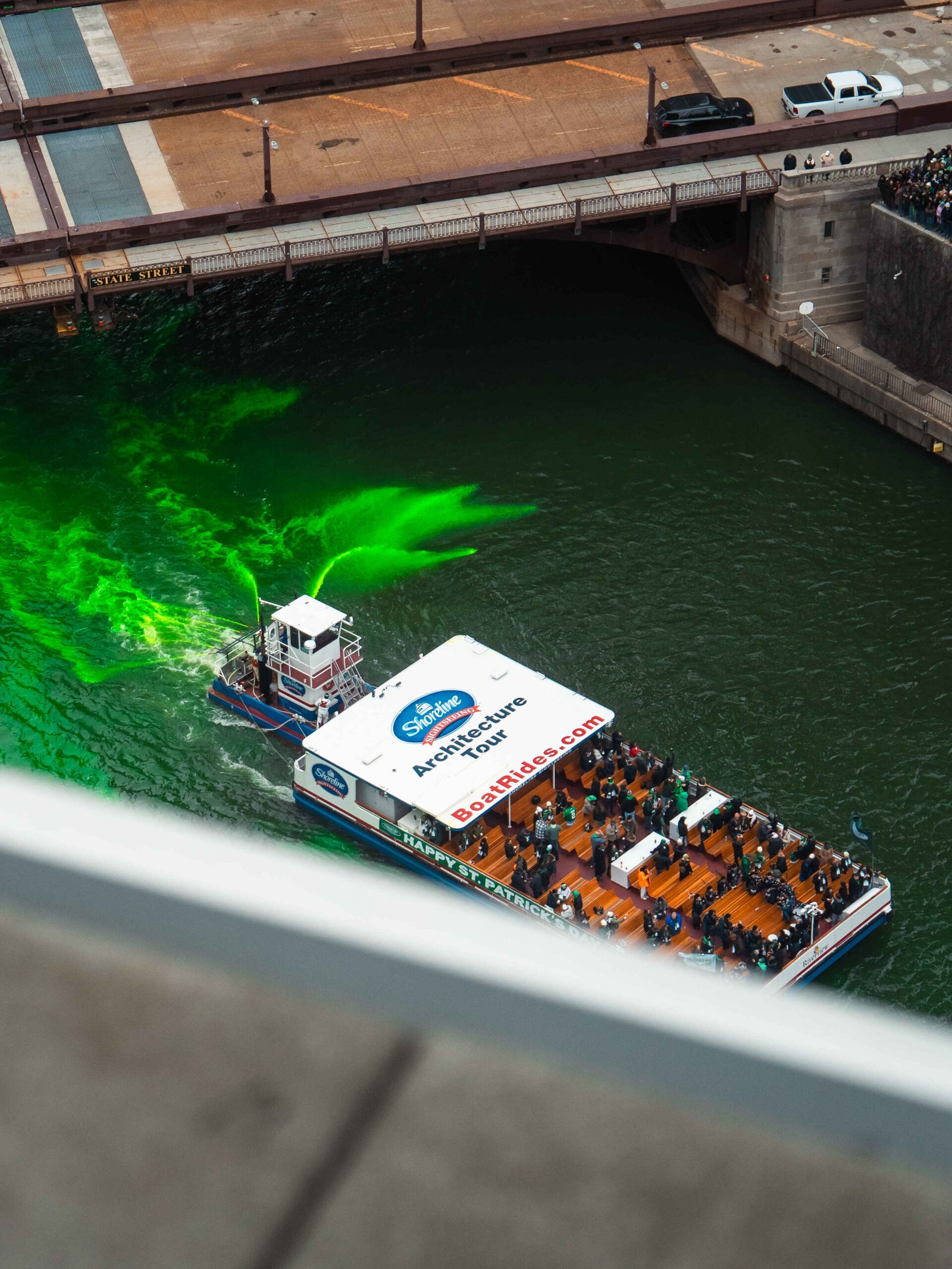
At exactly 10:00 AM, the boats arrived. From above, they looked small, but their impact was massive. I switched to the 24-70mm lens and increased shutter speed to capture movement in the water.
Technical Note:
I shot most frames at f/8 to maintain sharpness across the scene. Slight underexposure helped preserve highlights, especially where white boat wakes met darker water.
As the powder hit the river, the transformation was immediate. The color spread rapidly, turning the water into a vivid green. Even from 39 floors up, the crowd’s reaction was unmistakable.
11:30 AM: The Swissôtel Perspective
After capturing the initial transformation, I moved to the Swissôtel. Its triangular glass design offers a completely different perspective.
From the Presidential Suite, the scene expanded. I could see the river flowing into Lake Michigan, the Navy Pier Ferris wheel, and the parade route along Columbus Drive.
Using the 14mm lens, I captured a defining frame. The green river cut through steel-gray buildings, while crowds formed patterns of color below. This is where Chicago St Patrick’s Day photography shifts from detail to storytelling.
1:00 PM: The Unexpected Snowfall
Around 1:00 PM, the weather shifted. The sky darkened, and snow began to fall. Large, wet flakes added a new dimension to the scene.
Instead of leaving, people embraced it. I moved to street level to capture atmosphere. The Sony A7iv handled the conditions well, and the 24-70mm lens allowed quick adjustments.
The snowfall softened the light. I captured a group celebrating under a tavern sign, with snow settling on their shoulders and the green river behind them. It was a rare moment where winter and spring collided in a single frame.
The Aftermath: Energy on the Streets
The afternoon turned into a street-level exploration. I walked from Wacker Drive toward River North. Bars and restaurants were full, and the mood remained high.
Locations like Hoyt’s inside the Sonesta and nearby pubs stayed packed. People celebrated despite the cold. This resilience is part of Chicago’s identity.
Chicago St Patrick’s Day photography is not only about wide shots. It is also about human moments. A person in a kilt smiling in the cold, families sharing green-themed treats, and groups laughing together all contribute to the story.
Conclusion: Crafting the Final Narrative
While editing, I realized that the strongest images were not just the wide aerial shots. The most compelling frames included snow falling over the green river. That contrast told a deeper story.
Through collaborations with the Royal Sonesta and Swissôtel, I captured multiple perspectives of the event. From elevated luxury views to street-level scenes, the day offered constant visual variety.
If you want to explore the full gallery and upcoming prints, visit TheFacetPixel gallery.
Chicago St Patrick’s Day photography is about timing, preparation, and perspective. When all three align, you create images that go beyond documentation and become visual stories.